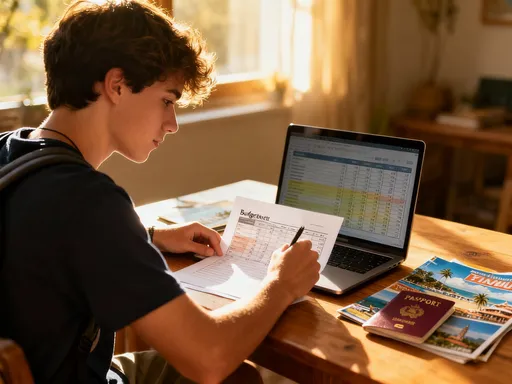
How I Nailed Financial Planning for Study Tours Without the Stress
Paying for a study tour shouldn’t mean draining your savings or losing sleep. I’ve been there—juggling budgets, unexpected costs, and family expectations. What started as an exciting opportunity almost became a financial headache. But after trial and error, I found a practical way to plan ahead, avoid overspending, and still make the experience worthwhile. This is how smart financial planning turned a stressful expense into a smooth, rewarding journey. It wasn’t about sudden windfalls or cutting corners on essentials. It was about clarity, consistency, and control. With the right approach, families can support their children’s growth through educational travel without compromising long-term stability. This is the roadmap that made all the difference.
The Real Cost of Study Tours – What Most People Overlook
When parents first hear about a study tour, the initial figure presented is often just the surface of a much deeper financial commitment. The advertised price may cover flights and accommodations, but it rarely includes everything needed for a safe, enriching, and stress-free experience. Families who assume they’ve accounted for all expenses based on that number alone often face surprises later—sometimes weeks before departure, when additional fees start appearing. These overlooked costs are not hidden in a deceptive way; they are simply not emphasized during early conversations. Yet they add up quickly and can strain household budgets if unprepared.
One of the most common omissions is application and administrative fees. Many programs require students to pay processing charges just to secure a spot. These can range from modest to substantial depending on the institution or organizing body. Then comes the cost of visas, which varies by destination and nationality. Some countries require medical checks or vaccinations as part of the visa process, introducing yet another layer of expense. Health insurance is another critical component that is sometimes optional in the program’s structure but essential in practice. Without proper coverage, a single medical incident abroad could result in thousands of dollars in out-of-pocket costs.
Personal spending is another area where estimates fall short. Students may be given a suggested allowance for meals, souvenirs, and incidental purchases. However, actual spending tends to exceed expectations, especially in cities with high living costs. A simple coffee or museum entry fee can be two or three times what families are used to at home. Additionally, there are pre-trip expenses such as language preparation courses, travel gear, luggage, adapters, and communication tools like international SIM cards or portable Wi-Fi devices. These may seem minor individually, but together they can amount to hundreds of dollars.
Consider the case of the Martinez family, who budgeted $4,500 for their daughter’s two-week program in London. They believed this covered everything. But two months before departure, they were asked to pay an additional $680 for academic materials, local transportation passes, and a mandatory orientation session. On top of that, they hadn’t factored in currency exchange fees, which added nearly $100 more due to unfavorable rates and service charges. Their story isn’t unique. A 2022 survey by the National Parent Education Network found that 67% of families underestimated total costs by at least 20%, with one in five underestimating by over 40%. Understanding the full scope of expenses—not just the headline number—is the foundation of responsible financial planning.
Why Financial Planning Matters More Than Just Saving Upfront
Many families believe that setting aside a fixed amount each month is enough to prepare for a study tour. While saving is essential, it’s only one piece of the puzzle. True financial planning goes beyond accumulation; it involves timing, flexibility, and strategic decision-making. Without these elements, even well-funded accounts can fall short when unexpected demands arise. The difference between success and struggle often lies not in income level, but in how thoughtfully the money is managed over time.
Take the example of two families, both earning similar household incomes and planning for a $5,000 study tour three years away. The Johnsons began saving immediately, putting away $140 per month without adjusting their plan. By the end of year two, they had saved nearly $3,400. But when medical expenses arose for a family member, they dipped into the fund, and despite resuming contributions, they entered the final year $800 short. Because they hadn’t built in flexibility or emergency buffers, they ended up using a high-interest credit card to cover the gap.
In contrast, the Thompsons adopted a more dynamic strategy. They also saved $140 monthly but placed the funds in a high-yield savings account that allowed limited withdrawals without penalty. They reviewed their budget every six months, adjusting contributions when possible and tracking inflation trends that might affect travel costs. They also set aside a small portion—10%—in a separate emergency reserve specifically for trip-related risks. When exchange rates fluctuated unfavorably six months before departure, they were able to draw from this reserve instead of derailing their main savings. As a result, they paid in full without debt and even had a small surplus.
This comparison highlights a key insight: financial planning is not static. It requires ongoing assessment and adaptation. Timing matters too. Some expenses, like airfare, are best booked early to lock in lower prices, while others, such as local spending money, can be managed closer to departure. Families who align their funding pace with actual disbursement needs reduce the risk of premature depletion or missed opportunities. Moreover, involving students in this process teaches them that money isn’t just about having enough, but about managing it wisely across time. Planning becomes not just a financial act, but an educational one.
Building Your Funding Strategy – Where the Money Comes From
Not every family has a dedicated education fund or extra cash lying around. For most, financing a study tour means making deliberate choices about where the money will come from. The goal isn’t to sacrifice long-term stability, but to redirect resources strategically without creating new debt. A successful funding strategy balances immediate needs with ongoing responsibilities, ensuring that one opportunity doesn’t undermine others.
One effective approach is reallocation. Many households spend more than they realize on non-essential subscriptions, dining out, or impulse purchases. A simple audit of monthly spending can reveal areas where temporary cuts can free up hundreds of dollars annually. For instance, switching from premium streaming services to a single shared plan, reducing takeout meals by half, or postponing a home renovation project can generate meaningful savings. The Ramirez family saved $200 per month for 18 months by adopting a “wait-and-see” mindset on discretionary spending. That added up to $3,600—enough to cover 80% of their son’s program fee.
Another source of funding is incremental income. This doesn’t require a second full-time job. Many parents find success through part-time gigs, freelance work, or selling unused household items online. Tutoring, seasonal retail work, or offering specialized skills like graphic design or bookkeeping can bring in extra cash without overwhelming daily routines. The Chen family supplemented their income by having the mother take on weekend tutoring sessions in math and science. Over two years, this brought in nearly $4,000, which was earmarked solely for the study tour. Even students can contribute by saving birthday money, part-time earnings, or completing chores for a set allowance tied to the goal.
Repurposing existing savings is another viable option, though it must be done carefully. Some families redirect funds from a general vacation account or a low-priority goal toward the study tour, especially if the educational value outweighs the original purpose. However, this should never involve touching retirement accounts, emergency funds, or money set aside for urgent needs. The key is intentionality: every dollar moved should have a clear justification and timeline. By combining multiple sources—modest lifestyle adjustments, small income boosts, and thoughtful reallocation—families can build a sustainable path forward without financial strain.
Risk Control – Protecting Your Investment When Things Go Wrong
No matter how carefully a family plans, unforeseen events can disrupt even the best-laid arrangements. A study tour represents a significant financial outlay, and without safeguards, cancellations or emergencies can lead to major losses. Risk control is not about expecting the worst; it’s about being prepared for what might happen. Just as homeowners insure their properties and drivers protect their vehicles, families investing in educational travel should protect their financial commitment.
Travel insurance is one of the most effective tools available. A comprehensive policy can cover trip cancellation, medical emergencies, lost luggage, and even evacuation if necessary. While it adds to the upfront cost—typically 5% to 10% of the total trip expense—it can prevent far greater losses. Consider the case of the Bennett family, whose daughter’s program in Japan was canceled due to severe weather disruptions. Because they had purchased a policy with a “Cancel for Any Reason” (CFAR) rider, they recovered 75% of their non-refundable payments. Without it, they would have lost over $4,000. Not all policies are the same, so it’s important to read the fine print and understand what is covered.
Refund policies from the program provider are equally important. Some organizations offer full refunds if canceled months in advance, while others provide only partial credit or none at all. Families should ask for written details early in the process and consider timing their largest payments closer to departure, when the risk of cancellation is lower. Spreading payments over time, rather than paying in full upfront, can also reduce exposure. One school program allowed families to pay in four installments, which gave them breathing room to respond to changes without being locked in financially.
Equally valuable is the creation of a contingency fund. This is a small reserve set aside specifically for trip-related emergencies—not for luxuries, but for unexpected needs like last-minute visa fees, medical visits, or replacement of lost documents. Even $300 to $500 can make a difference. The Peterson family kept a separate savings jar labeled “What If?” and contributed $25 per month. When their daughter needed an emergency dental visit abroad, the fund covered the cost without affecting their main budget. These preventive steps don’t eliminate risk, but they transform potential crises into manageable situations.
Smart Spending Tactics During the Program
Financial discipline doesn’t end once the plane lands. How money is spent during the study tour can significantly impact the overall experience and final cost. Students, often for the first time managing their own allowances, may be tempted by convenience, peer influence, or excitement. Without guidance, daily expenses can spiral. But with simple strategies and tools, families can ensure that spending remains intentional and aligned with the original budget.
One of the most effective tactics is using local currency wisely. Exchanging money at airports or tourist centers often comes with high fees and poor exchange rates. Instead, families can advise students to withdraw cash from ATMs affiliated with major banks, which typically offer better rates. Using a debit card with low foreign transaction fees is another smart move. Some banks offer travel-friendly accounts that waive these charges entirely. Parents can preload a travel card with a set amount, giving students access without the risk of overspending.
Avoiding tourist traps is another key to saving. Popular restaurants near landmarks often charge premium prices for average food. A short walk into residential neighborhoods can lead to authentic, affordable meals. Public transportation passes usually cost less than taxis or ride-sharing services and offer a more immersive experience. Students can use city maps or transit apps to navigate efficiently. Group purchases, such as shared entry tickets or bulk snacks, can also reduce per-person costs.
Digital tools play a crucial role in tracking spending. Budgeting apps like Mint, YNAB (You Need A Budget), or even simple spreadsheet templates can help students log daily expenses in real time. Some families set up a shared document where the student records purchases each evening. This not only keeps spending visible but also builds financial awareness. One mother reported that her daughter, after seeing how quickly small purchases added up, started choosing free cultural events over paid attractions and saved nearly $150 over two weeks.
Parental involvement should be supportive, not controlling. Open conversations before departure about spending limits, priorities, and trade-offs help set expectations. Giving students some autonomy within a framework teaches responsibility. The goal isn’t to deprive them of enjoyment, but to ensure that fun doesn’t come at the cost of financial regret.
Comparing Options – Is This Program Worth the Price?
With so many study tour opportunities available, choosing the right one requires more than excitement or peer pressure. Each program comes with a different price tag and a different set of benefits. To make a sound financial decision, families must evaluate not just the cost, but the value. This means looking beyond marketing materials and asking objective questions about educational outcomes, safety, structure, and long-term impact.
A useful framework is to compare programs side by side using clear criteria. Start with the curriculum: does the program offer meaningful academic content, or is it mostly sightseeing with minimal learning? Look for evidence of partnerships with schools, universities, or educational institutions. Programs that include workshops, guest lectures, or project-based learning tend to deliver stronger educational returns. Next, examine the daily schedule. A balanced mix of structured learning and cultural exposure is ideal. Overly packed itineraries may lead to burnout, while too much free time can reduce value.
Safety is another critical factor. Does the program have trained staff on-site? Are there clear emergency protocols? Are accommodations located in secure areas with reliable transportation access? Reputable programs provide detailed information about supervision ratios, health support, and communication plans. Cost should be weighed against these protections—a slightly higher price may be justified by better safety and support.
Long-term benefits also matter. Will the experience enhance college applications? Does it offer certificates, letters of recommendation, or skill development in areas like leadership or language proficiency? Some programs include alumni networks or follow-up activities that extend the value beyond the trip itself. Families who approach this decision analytically, rather than emotionally, are more likely to feel confident in their choice and satisfied with the outcome. A study tour is an investment in growth—and like any investment, it should be evaluated for return.
Turning Experience into Long-Term Financial Wisdom
The impact of a study tour extends far beyond the trip itself. For many families, the planning process becomes a powerful lesson in financial literacy. Budgeting, saving, risk assessment, and decision-making skills developed during this time don’t disappear when the journey ends—they become part of a lasting financial mindset. Children learn responsibility, parents gain confidence in managing complex goals, and households strengthen their ability to navigate future challenges.
Involving students in the planning process is one of the most effective ways to build awareness. When a teenager helps track expenses, compares program options, or contributes to a savings goal, they begin to understand the effort behind financial decisions. This shifts their relationship with money from passive consumption to active stewardship. One father shared that his daughter, after participating in the budget meetings, started saving for her own phone upgrade using the same method they used for the tour. The habits formed during one goal naturally applied to the next.
Parents also benefit. Many report feeling more in control of their finances after successfully funding a major expense without debt. They develop systems that can be reused for other goals—college savings, home repairs, or retirement planning. The discipline of setting a target, monitoring progress, and adjusting course builds confidence and reduces anxiety around money.
Moreover, the experience fosters stronger family communication. Financial topics are often avoided, yet they affect everyone. By discussing trade-offs, priorities, and long-term goals openly, families build trust and shared purpose. These conversations lay the groundwork for healthier financial relationships in the future. Ultimately, a study tour is not just an educational adventure abroad—it’s a catalyst for smarter, more intentional living at home.
A study tour doesn’t have to be a financial burden. With clear planning, risk awareness, and practical strategies, it can be both affordable and transformative. The key isn’t having more money—it’s making smarter moves with what you have. By understanding true costs, building flexible funding plans, protecting against risks, and spending wisely, families can turn a major expense into a meaningful achievement. The journey begins long before departure—with a conversation, a budget, and a decision to move forward with confidence. And when the student returns, not only with memories and knowledge, but with greater financial awareness, the true return on investment becomes clear.