Winding Roads and Wild Views: Driving East Timor’s Hidden Highlands
You know that feeling when the road just opens up and the world drops away below you? That’s Baucau for you—raw, real, and ridiculously beautiful. I grabbed my keys, hit the open road, and let East Timor’s eastern highlands surprise me at every turn. This isn’t just travel—it’s discovery. And trust me, the viewpoints here? Absolutely mind-blowing. With every mile, the landscape transforms: from coastal haze to mist-laced ridges, from quiet villages tucked into hillsides to roads that seem to hang in midair. Driving through this part of Southeast Asia offers something rare—authenticity, solitude, and scenery that feels untouched by time. For travelers seeking depth over dazzle, East Timor’s highlands deliver in ways few destinations can match.
The Call of the Open Road: Why Self-Driving in East Timor Changes Everything
Driving through East Timor isn’t about convenience—it’s about freedom. Unlike guided tours that stick to scripts, going solo by car lets you pause at that random dirt pull-off where the mist curls over the ridge, or linger when goats block the road (spoiler: they always win). Baucau, perched high above the north coast, is the perfect launchpad. The roads here? A mix of paved ambition and rugged reality—some smooth, others potholed and steep—but that’s part of the adventure. You’re not just moving from point A to B; you’re feeling the landscape shift beneath your wheels. From Dili, the two-hour drive east climbs into cooler air, greener hills, and fewer crowds. This is travel with no filters.
Self-driving allows for spontaneity, a crucial ingredient in meaningful travel. When you control the pace, you begin to notice more—the way light filters through banana leaves after a morning shower, the sudden appearance of a hillside spring, or the sound of distant church bells echoing across valleys. These moments aren’t found in brochures; they’re discovered in stillness, in the spaces between destinations. East Timor rewards the patient driver. There are no toll booths, no traffic jams, and certainly no GPS signals that work reliably in the mountains. Instead, navigation becomes intuitive: follow the road upward, trust local hand gestures, and watch for tire tracks in the mud.
What makes this experience transformative is its contrast to mainstream tourism. In many popular destinations, experiences are packaged, timed, and priced. Here, connection happens organically. A wave from a farmer walking home with a hoe over his shoulder, a shared smile with children playing near a stream—these interactions aren’t staged. They’re real, brief, and deeply human. Driving through East Timor’s highlands isn’t just a journey across terrain; it’s a return to travel as it once was—slow, personal, and full of wonder.
First Stop: Baucau Town – More Than Just a Pit Stop
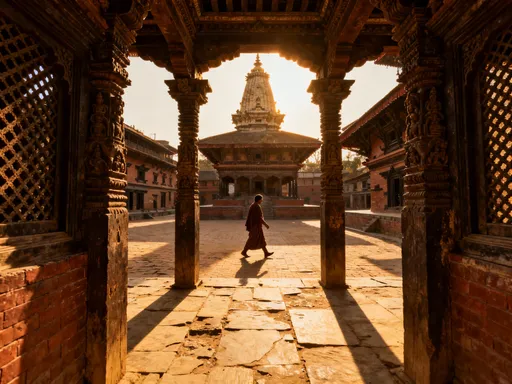
Before chasing views, take a breath in Baucau itself. It’s not flashy, but it’s alive—market stalls spilling with papayas and cassava, the scent of grilled corn in the air, and the quiet hum of Tetum and Portuguese drifting through alleyways. The town sits on a plateau, so even the roadside gives glimpses of the sea far below. Grab fuel here—essential—and maybe a cold tua mate (coconut water) from a roadside vendor. This is real East Timor: unhurried, unpolished, and warm. Spend an hour wandering. The old Portuguese-era buildings, though weathered, whisper stories of another time. But don’t linger too long—the real magic starts when you leave the town behind and climb higher.
Baucau offers a gentle introduction to Timorese culture. Women in traditional tais cloth carry baskets on their heads, while men gather under shaded eaves discussing the day’s news. The municipal market pulses with activity—vendors sell everything from handwoven mats to fresh fish hauled in from the coast. Prices are modest, and bargaining is rare; commerce here feels more like exchange than transaction. A cup of locally grown coffee, served hot and sweet from a roadside stand, costs little but delivers immense comfort. These small pleasures ground the traveler, reminding us that travel isn’t only about grand vistas—it’s also about daily life, dignity, and resilience.
For those interested in history, Baucau’s colonial architecture provides subtle clues to the nation’s complex past. Once under Portuguese rule for centuries, then occupied by Indonesia, East Timor gained independence in 2002 after a long struggle. Remnants of that era remain in crumbling stucco facades and rusted iron balconies. Yet there is no bitterness in the air—only quiet strength. Locals speak of their country with pride, not pity. As you prepare to leave town, filling your tank at the only functioning fuel station on the main road, you sense that you’re stepping beyond the known. Baucau is the threshold. Beyond lies the wild heart of the island.
The Ascent to Soibada: Where the Clouds Begin to Dance
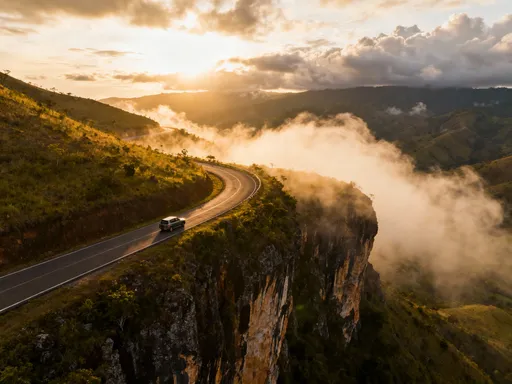
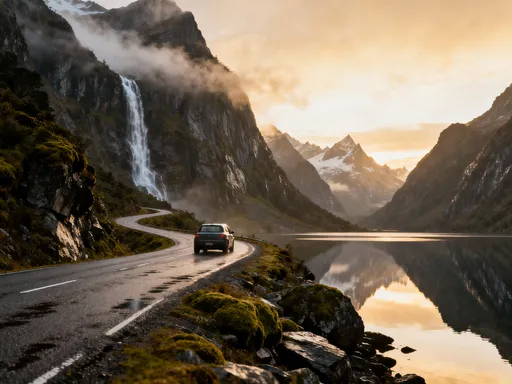
Head south from Baucau toward Soibada, and the temperature drops like someone hit a chill button. This winding route climbs fast—hairpin turns, steep drops, and views that make you want to pull over every five minutes. The road isn’t perfect, but a regular sedan can handle it in dry season. As you rise, the jungle thickens, and clouds start threading through the valleys like smoke. At around 1,200 meters, Soibada feels like another world—cooler, misty, and wrapped in green. There’s no tourist infrastructure to speak of, which means no crowds, no prices marked up for foreigners—just real village life. Park near the small church or community center and take a short walk uphill. Turn around. That view behind you? Mountains folding into mountains, with Baucau’s coastline now a distant blue line.
The journey to Soibada is as rewarding as the destination. Each curve reveals a new layer of beauty: terraced fields carved into steep slopes, bamboo homes nestled in clearings, and streams tumbling down rocky chutes. The vegetation changes dramatically as elevation increases—lush lowland palms give way to moss-covered oaks and wild ferns. Birdsong replaces engine noise when you stop to rest. This is biodiversity in action, though largely undocumented by Western standards. What scientists might call ecological transition, locals simply know as home.
Soibada itself is a quiet administrative center with a population of a few thousand. Children walk barefoot to school along red-dirt paths. Elders sit outside homes, weaving baskets or mending fishing nets. There are no souvenir shops, no guided tours, and no Wi-Fi cafes. And yet, the sense of welcome is unmistakable. A nod, a smile, an invitation to share a seat under a tree—these gestures speak volumes. Visitors are rare, but not unwelcome. When you walk through the village, you’re not an intrusion; you’re a guest. This authenticity is increasingly rare in a world where even remote destinations are shaped by tourism. In Soibada, life continues as it has for generations—rooted, deliberate, and deeply connected to the land.
The Hidden Lookout Near Laclo: A Secret Worth the Detour
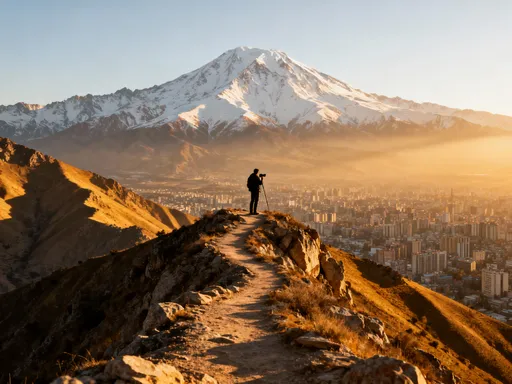
Backtrack slightly and take the less-traveled road toward Laclo River. It’s rougher, sure, but worth it for the secluded viewpoint just past a small wooden bridge. You’ll know it when the trees thin and the land suddenly falls away. Below, the Laclo River cuts through a deep gorge, flanked by red earth and wild grasses. On clear mornings, sunlight hits the valley just right, turning everything gold. Bring water, wear decent shoes, and watch your step—there’s no railing, no signs, just nature in full force. This isn’t Instagram-bait with a crowd; it’s raw, untouched, and humbling. Spend twenty quiet minutes here. Listen. Breathe. Remember why you came.
This stretch of road is not marked on most maps, and few tourists attempt it. But for those willing to navigate the bumpy track, the reward is solitude and perspective. The viewpoint overlooks one of East Timor’s most dramatic landscapes—a canyon carved by centuries of water and wind, where the river snakes like a silver thread through rust-colored cliffs. From above, the scale is staggering. You feel both insignificant and deeply present. There are no fences, no guardrails, no interpretive signs explaining the geology. Just earth, sky, and silence.
Such places remind us that nature does not exist for our entertainment. It simply *is*. And in that simplicity lies its power. Sitting on a warm rock, watching raptors circle on thermal updrafts, you begin to understand the value of stillness. Modern life pulls us in countless directions—emails, notifications, schedules—but here, time slows. The only urgency is the need to pay attention. This is mindfulness not as a trend, but as a practice born of place. The Laclo lookout doesn’t demand anything of you. It merely offers. And in that offering, there is healing.
Mount Matebian? Not Today—But the Road Gets You Close
Mount Matebian looms large in East Timor’s history and landscape, but reaching the summit requires a serious trek. Good news: the drive toward it from Baucau delivers insane views without the sweat. The road to Iliomar may be one of the most challenging—and rewarding—routes in the country. As you climb, the curves tighten, the drops get steeper, and the panoramas explode. You’ll see terraced hillsides, remote hamlets, and, if you’re lucky, farmers guiding water buffalo through misty fields. Stop often. Take photos. Let the scale of it all sink in. You don’t need to reach the top to feel on top of the world.
Matebian is more than a mountain; it’s a symbol. During the resistance against occupation, it served as a refuge for freedom fighters. Today, it stands as a monument to resilience and national identity. While visiting the summit involves a multi-day trek with local guides, the approach by road offers powerful glimpses into both natural and cultural history. Villages along the way maintain traditional ways of life—subsistence farming, communal land use, oral storytelling. There is no electricity in many homes, yet laughter echoes from doorways, and music rises from hand-carved instruments.
The drive itself becomes a meditation. With every kilometer, the air grows cooler, the sky wider. The road narrows, sometimes reduced to a single lane of packed earth and gravel. You meet oncoming vehicles with care, often pulling over on widened shoulders to let others pass. These encounters are civil, even courteous—drivers wave, sometimes stopping to exchange greetings. There is no honking, no impatience. In a world obsessed with speed, this slowness feels revolutionary. It’s not inefficiency; it’s intentionality. People here move at the pace of life, not machines. And in that rhythm, there is peace.
Practical Tips for the Solo Driver: Fuel, Roads, and Local Etiquette
Self-driving here isn’t for the faint-hearted. Fuel stations are few—fill up in Baucau. Roads can be rough, especially after rain. 4WD helps, but dry-season sedan travel is doable if you drive slow and steady. Locals wave, kids smile, and patience is key—this isn’t a race. Respect village rhythms. Ask before photographing people. Carry cash, snacks, and extra water. And always, always check the weather. Fog can roll in fast, turning that epic mountain road into a white tunnel. But when the sky clears? That’s when East Timor shows off.
Preparation is essential. Ensure your vehicle is in good condition before departure—check tires, brakes, and fluids. Spare parts are hard to find outside major towns. Mobile networks are unreliable, so download offline maps if possible. While GPS can be spotty, physical maps are uncommon. Locals are generally helpful with directions, but language can be a barrier—Tetum and Portuguese are widely spoken, while English is limited. Learning a few basic phrases goes a long way: "Boa dia" (good morning), "Obrigadu" (thank you), "Tenki ajuda?" (Need help?). These small efforts are met with warmth and appreciation.
Driving etiquette in rural East Timor is informal but respectful. Animals roam freely—goats, pigs, chickens, and water buffalo often occupy the road. Slow down and wait patiently. Honking startles both animals and people. When passing villages, reduce speed and avoid loud music. It’s customary to greet others with a nod or a wave, especially if you’ve stopped to take photos or ask directions. Always ask permission before photographing individuals, particularly elders. Gifts aren’t expected, but offering a small token—like school supplies for children or a donation to a community center—can build goodwill. Remember, you are a guest in someone’s homeland.
Why These Viewpoints Stay With You—Long After the Engine Cools
Because they’re not just views. They’re moments. That silence at the Laclo lookout. The cool breeze on Soibada’s ridge. The way the land just unfolds. Driving through Baucau’s highlands isn’t about ticking boxes—it’s about feeling connected. To the earth, to the moment, to a country still writing its story. You don’t come here for comfort. You come for truth. And as the sun dips behind the mountains and you point the car back toward town, you realize: some journeys don’t end when you park. They stay with you.
Travel has the power to change us, not because we see new places, but because we see ourselves differently within them. In East Timor’s highlands, stripped of distractions, we confront what matters: presence, humility, and connection. The roads are imperfect, the accommodations simple, the comforts few. And yet, the richness is undeniable. It lives in the eyes of a child who smiles as you pass, in the taste of bread baked over an open fire, in the sound of rain on a tin roof at dusk. These are not luxuries—they are essentials.
For women in their thirties to fifties, often balancing family, work, and personal dreams, journeys like this offer rare space for reflection. There is no pressure to perform, no audience to impress. Just sky, road, and self. In a life filled with responsibilities, such freedom is precious. It reminds us that we are more than our roles—that curiosity, courage, and wonder still belong to us. Driving East Timor’s hidden highlands isn’t an escape. It’s a homecoming—to the world, and to ourselves.