You Won’t Believe These Cultural Viewpoints in Patan
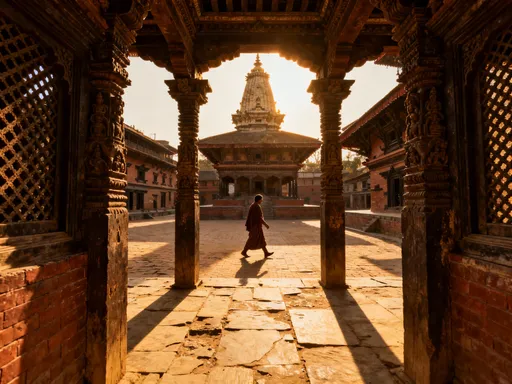
Patan isn’t just another stop on the Nepal circuit—it’s a living museum. I never expected to feel so immersed in history just by walking through alleys. From temple rooftops to hidden courtyards, every viewpoint tells a story. The way light hits ancient carvings at golden hour? Mind-blowing. If you're chasing culture beyond the surface, Patan’s perspectives will change how you see heritage. This is more than sightseeing—it’s feeling the past breathe.
Why Patan Stands Out in Nepal’s Cultural Landscape
Among Nepal’s historic cities, Patan occupies a singular place. While Kathmandu pulses with urban energy and Bhaktapur preserves a more isolated medieval charm, Patan strikes a rare balance—deeply traditional yet seamlessly woven into daily life. Located just across the Bagmati River from the capital, it has long been a center of Newar civilization, the indigenous community whose craftsmanship and spiritual traditions have shaped the Kathmandu Valley for over a millennium. Unlike larger, more commercialized zones, Patan’s compact grid of red-brick alleys and timbered homes allows visitors to experience culture at human scale.
What sets Patan apart is not just its wealth of temples and palaces, but how they coexist with modern life. A metalworker hammers brass puja bowls steps away from a 12th-century shrine. A grandmother sweeps her courtyard beneath carved struts depicting deities in mid-dance. This continuity—where heritage isn’t preserved behind glass but lived in real time—creates an unmatched sense of authenticity. The city’s layout, designed according to ancient Vastu Shastra principles, enhances this immersion. Streets radiate from central squares, guiding movement through sacred geography that still informs local life.
Compared to other heritage sites in the region, Patan’s artistry is particularly refined. The precision of woodcarving, the symmetry of repoussé metalwork, and the elegance of brick masonry reflect centuries of accumulated skill. This is not architecture built for spectacle, but for devotion and community. Even after the 2015 earthquake, reconstruction efforts prioritized traditional techniques, ensuring that rebuilt structures retain their cultural integrity. For travelers seeking depth over dazzle, Patan offers a quiet mastery that unfolds gradually, rewarding those who take time to look closely.
The Heartbeat of Heritage: Patan Durbar Square as a Living Stage
Patan Durbar Square is not a relic frozen in time—it is a stage where history performs daily. Unlike museum-like plazas elsewhere, this UNESCO World Heritage Site thrums with activity from dawn until dusk. Women in cotton saris place marigolds at temple thresholds. Priests ring bells during morning aarti. Children dart between stone lions while elders recite mantras on sun-warmed steps. Every corner pulses with purpose, making the square less a tourist destination than a vital community heart.
From the broad stone staircase of Krishna Mandir, one of the earliest all-stone temples in Nepal, the full composition of the square unfolds. The pyramidal roof of the temple itself, adorned with intricate friezes of Lord Krishna’s life, rises against the skyline. Beyond it, the tiered pagodas of Hari Shankar and Sundari Chowk create a rhythm of vertical lines, each level diminishing in size as it climbs skyward. The alignment is not accidental—it reflects a cosmology in which the earthly realm ascends toward the divine.
Another powerful vantage lies on the upper balcony of the former royal palace, now part of the Patan Museum. From here, the eye sweeps across a sea of red-tiled roofs, punctuated by temple spires and fluttering prayer flags. The view captures not only architecture but the choreography of daily life: a vendor arranging fruit, a monk in maroon robes pausing to bless a passerby, a group of schoolchildren gathering for a lesson in the courtyard below. This layered perspective—where spiritual, social, and aesthetic dimensions intersect—defines Patan’s unique cultural depth.
Even during quieter hours, the square retains a sense of presence. Shadows lengthen across carved stone elephants. The scent of incense lingers in sheltered alcoves. The occasional chime of a distant bell echoes through the stillness. These moments invite reflection, reminding visitors that this is not merely a place to see, but to feel. For those willing to slow down, Patan Durbar Square offers a rare opportunity to witness heritage not as a performance, but as an ongoing way of life.
Rooflines and Rooftops: Where Architecture Meets Sky
To truly grasp Patan’s architectural poetry, one must rise above street level. From elevated vantage points, the city reveals its intricate patterns—interlocking courtyards, cascading roof tiers, and the rhythmic repetition of wooden struts carved with divine faces. These rooftop perspectives transform the city into a three-dimensional map of devotion and design, where every slope and spire carries symbolic weight.
Several heritage hotels and cafés offer public access to terraces with panoramic views. One such spot, perched above a restored Newari home, overlooks the eastern quadrant of the old city. At sunrise, the first light gilds the uppermost finials of temples, turning bronze stupas into glowing beacons. As the sun climbs, shadows retreat from stone courtyards, revealing details invisible at ground level—the delicate tracery of latticed windows, the alignment of roof struts, the way water spouts shaped like lion heads channel rainwater into stone basins.
The architectural language of Patan is best understood from above. The pagoda style, perfected here over centuries, features multiple diminishing tiers supported by elaborately carved wooden brackets. Each roof level represents a stage of spiritual ascent, culminating in the gilded pinnacle that symbolizes enlightenment. From a rooftop, this progression becomes visible not just in individual temples, but across the cityscape, where clusters of shrines create a skyline that feels both organic and intentional.
Dusk offers a different kind of revelation. As electric lights flicker on in homes and shops, the warm glow contrasts with the cooling blue of the evening sky. Temples, illuminated from below, cast dramatic silhouettes against the horizon. The call to prayer from a nearby mosque blends with the distant chant of Buddhist sutras, a sonic tapestry that mirrors the city’s religious harmony. For photographers and contemplative travelers alike, these twilight hours provide the most evocative conditions—soft light, rich color, and a sense of the sacred made visible.
Hidden Courtyards: Off-the-Beaten-Path Perspectives
Beyond the main squares and thoroughfares lie Patan’s most intimate cultural spaces—the *choks*, or traditional inner courtyards. Often hidden behind plain doorways, these private compounds open into worlds of quiet beauty and meticulous design. Accessed only with permission or through guided cultural walks, they offer a rare glimpse into the domestic heart of Newar life, where architecture, family, and ritual intertwine.
A typical chok is a square or rectangular courtyard surrounded by two- or three-story buildings with ornate wooden balconies. The central space, paved with brick or stone, serves as a communal area for festivals, family gatherings, and daily chores. Water spouts, often shaped like mythological creatures, provide ritual cleansing. Intricately carved windows—called *tikijhyas*—filter light into interior rooms, creating patterns that shift with the sun’s path. Every element, from the placement of doors to the height of thresholds, follows traditional principles meant to harmonize human life with cosmic order.
Walking through a chok feels like stepping into a living archive. An elderly woman may be spinning yarn on a handloom, her movements echoing generations of textile craft. A young artisan might be restoring a damaged wood carving, using tools and techniques passed down through his family. These courtyards are not museum exhibits—they are homes, workshops, and places of worship, all at once. Their preservation is a testament to the resilience of Newar culture, even as urban pressures mount.
Respectful exploration is essential. These are not tourist attractions but private domains. Visitors should always seek permission, move quietly, and avoid intrusive photography. Many families welcome cultural exchange, especially when approached with humility and interest. Some community-led tours now facilitate access, ensuring that tourism supports preservation rather than disruption. For those fortunate enough to enter, the experience is unforgettable—a moment of connection with a way of life that values balance, beauty, and belonging.
Temple Balconies and Sacred Elevations
Some of Patan’s most powerful viewpoints are found within its sacred spaces—upper galleries, temple porches, and monastery balconies that offer both physical and symbolic elevation. These locations provide more than scenic vistas; they afford insight into the spiritual logic of the city, where height corresponds to holiness, and perspective is both literal and metaphysical.
In Hindu and Buddhist temples alike, the highest accessible levels are often reserved for priests and monks. Yet even from lower terraces, visitors can observe the layered activity below. At the Golden Temple (Hiranya Varna Mahavihar), also known as the Temple of Thousand Buddhas, the upper walkway encircling the main shrine allows a 360-degree view of the surrounding neighborhood. From here, one sees not only rooftops and spires but the daily rhythm of devotion—pilgrims circling the temple, monks chanting in the courtyard, butter lamps flickering in alcoves.
Access to the most elevated spaces is limited, and rightly so. These are not observation decks but sacred precincts, where silence and decorum are expected. In some temples, wooden ladders lead to upper chambers used for storing scriptures or housing relics. While tourists may not enter, glimpsing these spaces through open doorways adds to the sense of mystery and reverence. The architecture itself teaches: ascent requires effort, and deeper understanding comes with patience.
From a cultural standpoint, these elevated views reinforce the idea that spirituality is not separate from the world but observes it from a higher vantage. A monk on a monastery balcony sees the same streets as a tourist, but interprets them differently—as a flow of karma, a cycle of suffering and release. For visitors, standing in such a place, even briefly, can shift perception. The city becomes not just a collection of buildings, but a living field of energy, intention, and memory.
Local Eyes: How Residents See Their City
To understand Patan fully, one must consider how its people experience their surroundings. For residents, the city’s beauty is not something to be photographed and admired from afar—it is the backdrop of daily existence, woven into routines of work, worship, and relationship. Their perspective is not one of wonder, but of belonging, shaped by generations of living within these ancient walls.
Artisans, in particular, see the city through the lens of their craft. A woodcarver notices the grain of a centuries-old strut, assessing its condition with a restorer’s eye. A metalworker traces the lineage of a temple’s roof finial, recognizing the hand of a master from the 18th century. These skills are not merely technical—they are forms of memory, passed down orally and through practice. For them, preservation is not a project but a responsibility.
Shopkeepers and homemakers, too, hold intimate knowledge of their neighborhoods. They know which alley floods during monsoon, which temple courtyard stays coolest in summer, which corner offers the best view of the full moon during festivals. Their navigation is not guided by maps but by lived experience, a spatial intelligence honed over years. A grandmother might point out the exact spot where she watched her daughter’s wedding procession pass decades ago, the memory as vivid as the carvings on the nearby temple wall.
This local gaze contrasts with the tourist’s search for novelty. Where a visitor sees exoticism, a resident sees continuity. Where a camera seeks symmetry, a lifelong observer sees change—the repaired roof, the new shop, the family that moved away. Yet there is pride in this endurance. Patan is not frozen; it evolves, but on its own terms. To walk with a local, even in silence, is to learn a different way of seeing—one that values presence over spectacle, and memory over moment.
Chasing Light and Time: When to Visit for Maximum Impact
The experience of Patan shifts dramatically with the hour and season. To witness its cultural viewpoints at their most powerful, timing is as important as location. Early mornings offer the clearest light and the quietest streets, when mist still clings to courtyards and the first worshippers arrive at temples with offerings of rice and flowers. This is the ideal time for photography, meditation, or simply absorbing the city’s stillness before daily life fully awakens.
Late afternoon, especially in the dry season from October to March, brings the golden hour that painters dream of. The low-angle sun bathes red brick and carved wood in warm tones, enhancing texture and depth. Shadows stretch across plazas, emphasizing the geometry of stone and timber. It is during these hours that the city’s architectural harmony becomes most apparent, as light and shadow choreograph a daily performance.
Festival times offer a different kind of intensity. During Indra Jatra, the city erupts in color and sound, with masked dancers, towering chariots, and night-long processions. Buddha Jayanti brings a more meditative energy, as devotees circumambulate stupas carrying butter lamps. These events transform viewpoints into dynamic scenes of collective joy and devotion. While crowds increase, so does the sense of cultural aliveness. For travelers seeking immersion, aligning a visit with a major festival can be deeply rewarding.
Regardless of timing, mindfulness enhances the experience. Rather than rushing from site to site, a slower pace allows the city to reveal itself gradually. Put the camera down occasionally. Sit on a step. Listen to the rhythm of bells and footsteps. Let the details accumulate. Patan rewards attention, not speed. The best moments often come unexpectedly—a child’s laugh echoing in a courtyard, the sudden scent of marigolds, the way sunlight hits a gilded spire just as a monk begins to chant.
Ultimately, the most meaningful viewpoints in Patan are not the highest or most photogenic, but those that connect the observer to the flow of life. They are found in quiet alleys, shared glances, and moments of stillness. They require not just eyes, but presence. To visit Patan thoughtfully is to leave not only with images, but with a deeper sense of how culture lives—not in monuments alone, but in the spaces between them, in the breath of the city itself.